Agios KonstantinosMenemen Protestant Church
Menemen, Izmir, TürkiyeFaith, history and a living community

Anatolia in the Bible

The earliest roads of faith crossed these lands.

Anatolia is more than a backdrop to the Bible. It is a living geography where apostles travelled, early communities were formed and Christian thought took shape.

The witness of these lands

Biblical Anatolia is today’s Türkiye.

Abraham departed from Harran, Paul was born in Tarsus and the disciples of Jesus were first called Christians in Antioch. The good news was proclaimed along Anatolia’s roads, from Perga to Iconium and from Lystra to Ephesus.

Acts, Paul’s letters, Peter’s letter to the regions of Anatolia and early church records show the place of this geography in the history of faith. Anatolia is not a silent map from the past, but land where the gospel of Christ took root and spread to the world.

Important people

Witnesses formed and welcomed by Anatolia.

Abraham01József Molnár · Public domain
Genesis 11–25

Abraham

Harran and the road to Canaan

Abraham’s family left Ur of the Chaldeans intending to go to Canaan but settled at Harran. There God called Abraham to leave his country and wider family for a land he would be shown. At seventy-five he departed Harran with Sarah and Lot. This southeastern Anatolian stopping place became the threshold of a journey into the unknown by faith.

Read the full story
Rebekah02Gustave Doré · Public domain
Genesis 24–27

Rebekah

Aram Naharaim and the Harran region

Rebekah lived in Aram Naharaim, where Abraham’s servant came seeking a wife for Isaac. At the well she offered water not only to the stranger but also to his camels, revealing generosity and strength. She chose to leave her family, travelled a long road and became Isaac’s wife. Her story joins hospitality, courage and a new beginning within God’s promise.

Read the full story
Jacob03Luca Giordano · Public domain
Genesis 27–33

Jacob

Harran and Paddan Aram

Jacob fled Esau’s anger and went to his uncle Laban in Harran. He worked seven years for Rachel but was deceived, then lived through twenty years of labour, rivalry and blessing within the family formed with Leah and Rachel. He left Harran with a large household. On the return road he wrestled with God, received the name Israel and walked toward reconciliation with Esau.

Read the full story
Noah04W. Bulach · CC BY-SA 4.0
Genesis 6–9

Noah

The mountains of Ararat and eastern Anatolian tradition

Genesis says that Noah walked with God in a world filled with violence and was called to build an ark for his household. As the floodwaters receded, the ark rested on the ‘mountains of Ararat.’ The phrase points to the ancient region of Urartu rather than explicitly naming today’s Mount Ararat. Later tradition strongly associated the story with Ağrı Dağı in eastern Türkiye.

Read the full story
The Apostle Paul05Jordi Gili · CC BY-SA 4.0
First century AD

The Apostle Paul

Tarsus and the cities of Anatolia

Born in Tarsus, Paul grew up where Jewish learning, Greek-speaking urban culture and Roman citizenship met. He first persecuted the followers of Jesus, but his encounter with Christ on the Damascus road redirected his entire life. Sent by the church in Antioch, he repeatedly crossed Anatolia, formed communities and raised leaders. His letters now make up a major part of the New Testament.

Read the full story
Barnabas06Jacob Pynas / The Metropolitan Museum of Art · CC0
First century AD

Barnabas

Cyprus, Antioch and the cities of Anatolia

The apostles gave Joseph, a Levite from Cyprus, the name Barnabas, meaning ‘son of encouragement.’ When others feared Paul, Barnabas welcomed him, introduced him to the apostles and later went to Tarsus to bring him into the ministry at Antioch. The Holy Spirit then sent Barnabas and Paul through the cities of Anatolia. His life shows the power of leadership that recognises God’s gift in others and gives them another opportunity.

Read the full story
Timothy07Nicolas Sanson · Public domain
First century AD

Timothy

Lystra and Ephesus

Timothy grew up in Lystra as the son of a believing Jewish mother and a Greek father. The sincere faith of his mother Eunice and grandmother Lois marked his life. Paul invited him to join the mission, and Timothy accepted difficult assignments from Macedonia and Corinth to Ephesus. Despite his youth and personal struggles, he became a trusted leader and spiritual son.

Read the full story
Aquila and Priscilla08Zeynel Cebeci · CC BY-SA 4.0
First century AD

Aquila and Priscilla

Pontus, Corinth, Ephesus and Rome

Aquila of Pontus and his wife Priscilla met Paul in Corinth after Emperor Claudius forced them to leave Rome. They shared the same trade, and their workplace soon became a partnership in the gospel. In Ephesus they welcomed the gifted preacher Apollos and explained God’s way to him more accurately. In several cities their home became a meeting place for the church.

Read the full story
The Apostle John09Bernard Gagnon · CC BY-SA 3.0
First century AD

The Apostle John

Galilee, Jerusalem, Patmos and the Ephesian tradition

John, son of Zebedee, left his fishing nets and became one of Jesus’ closest disciples. He witnessed the cross and the empty tomb and served the first community in Jerusalem beside Peter. Revelation presents him on Patmos, addressing the seven churches of the Roman province of Asia. Early church tradition connects his later years with Ephesus and its surroundings.

Read the full story
Mary, Mother of Jesus10Yair Haklai · CC BY-SA 4.0
John 19:26–27 and later tradition

Mary, Mother of Jesus

Selçuk, İzmir

The Bible does not explicitly say that Mary lived in Ephesus. The belief grew from Jesus entrusting his mother to the beloved disciple at the cross and the church tradition that John spent his final years in Ephesus. The House of the Virgin Mary near Selçuk is now a place of prayer and remembrance linked with this tradition. It is presented here not as historical certainty, but as a faith memory carried with reverence through the centuries.

Read the full story
The Apostle Philip11Carole Raddato · CC BY-SA 2.0
First-century tradition

The Apostle Philip

Hierapolis, Denizli

Early church testimony places the Apostle Philip in Hierapolis, where he preached and died. The monumental martyrium built in his name and remains associated with his tomb show how strongly the tradition endured. Details of his death vary between accounts, but Hierapolis remains one of the principal Christian centres linked with Philip’s memory.

Read the full story

Turning points

Events that changed the course of the gospel.

From the biblical era into the early centuries, these developments show that Anatolia was not simply a route of passage but one of the centres where Christianity took shape.

  1. 01
    Acts 2:9–11

    People of Anatolia at Pentecost

    Those who heard the good news in their own languages in Jerusalem included visitors from Cappadocia, Pontus, Asia, Phrygia and Pamphylia. People from many parts of Anatolia heard the message that day.

  2. 02
    Acts 11:19–26

    Believers were first called Christians

    Jews and people from other nations came together in Christ in the multicultural community of Antioch. The disciples of Jesus were first known as Christians there.

  3. 03
    Acts 13:1–3

    Barnabas and Paul were sent from Antioch

    After praying and fasting, the church in Antioch sent Barnabas and Paul. The gospel then travelled through the cities of Anatolia and into the wider Mediterranean world.

  4. 04
    Acts 13–20

    New communities arose across Anatolia

    Perga, Pisidian Antioch, Iconium, Lystra, Derbe, Troas, Ephesus and Miletus witnessed Paul’s journeys. Communities grew and local leaders were raised despite opposition.

  5. 05
    Acts 19:8–10

    The word spread from Ephesus

    Paul taught in Ephesus for an extended period. Acts says that people throughout the Roman province of Asia heard the word of the Lord through this ministry.

  6. 06
    AD 325–451

    The great gatherings of the early centuries

    Early councils held at Nicaea, Constantinople, Ephesus and Chalcedon helped the church develop a shared language about the identity of Christ and the Christian faith.

Cities and regions

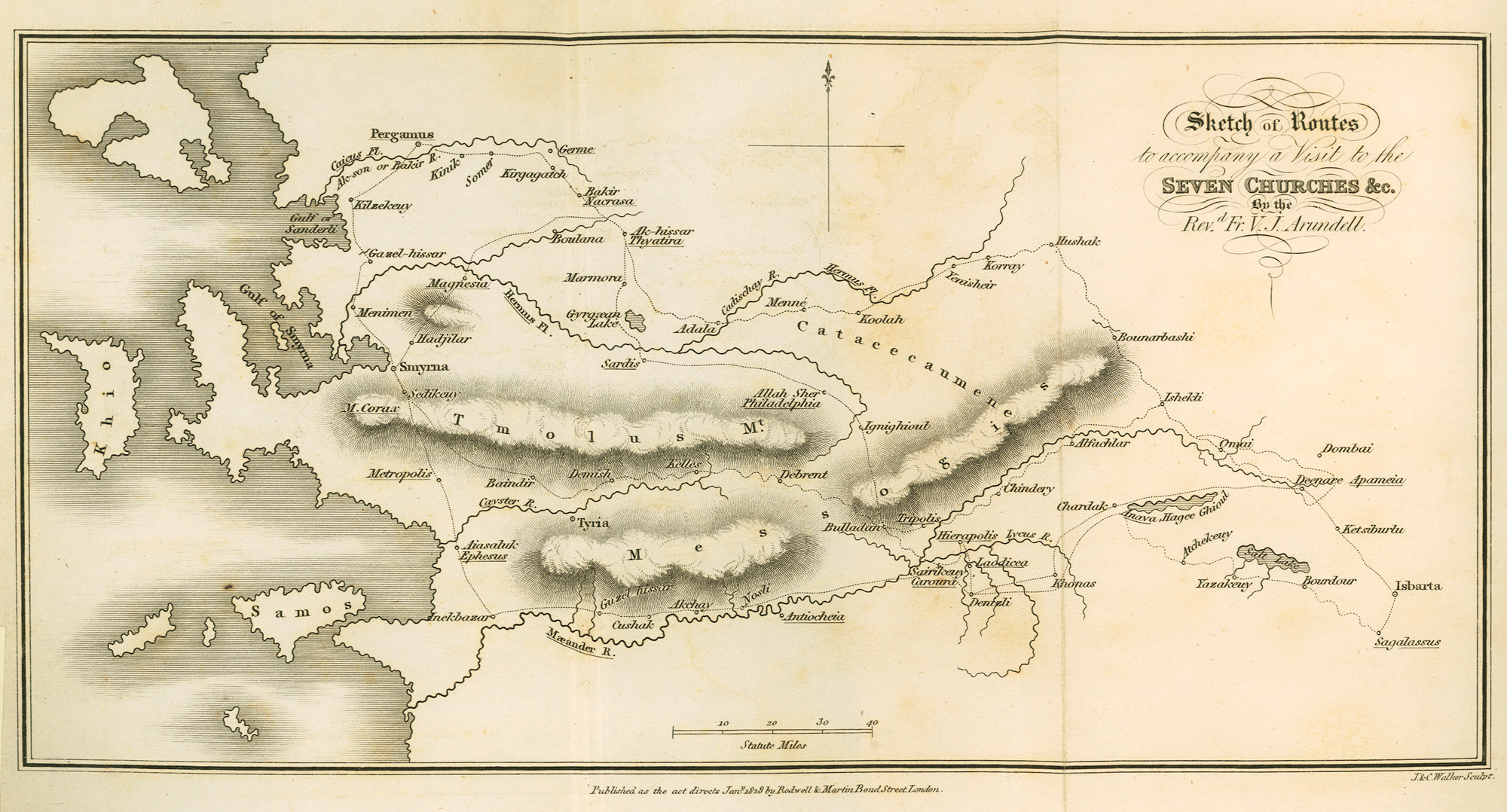
A biblical map of Anatolia.

HarranTheugursevinc · CC BY-SA 4.001Genesis 11:31–12:5

Harran

Şanlıurfa

The city where Abraham and his family lived for a time and from which he departed for Canaan in response to God’s call.

TarsusJordi Gili · CC BY-SA 4.002Acts 9:11; 21:39

Tarsus

Mersin

Paul’s birthplace and an important centre of Cilicia where Jewish, Greek and Roman cultures met.

AntiochCarole Raddato · CC BY-SA 2.003Acts 11:19–26; 13:1–3

Antioch

Hatay

The city of the strong church where believers were first called Christians and where Barnabas and Paul were sent into gospel ministry.

Perga and PamphyliaSaffron Blaze · CC BY-SA 3.004Acts 13:13–14; 14:25

Perga and Pamphylia

Antalya

An important Roman port and settlement region visited by Paul and his companions as they travelled into the Anatolian interior.

Pisidian AntiochBasak · CC BY-SA 4.005Acts 13:14–52

Pisidian Antioch

Yalvaç, Isparta

The city where one of Paul’s longest recorded synagogue speeches was delivered and the gospel was heard across the surrounding region.

Iconium, Lystra and DerbeNicolas Sanson · Public domain06Acts 14; 16:1–5

Iconium, Lystra and Derbe

Central Anatolia

A chain of cities where new communities were established, Timothy joined the ministry and believers were strengthened.

EphesusBenh LIEU SONG · CC BY-SA 3.007Acts 18–20; Ephesians

Ephesus

Selçuk, İzmir

The great port city where Paul served for about three years, the gospel reached the Roman province of Asia and early church history was deeply shaped.

Colossae and HierapolisA.Savin, Wikipedia · FAL08Colossians 1:2; 4:13

Colossae and Hierapolis

Denizli

Interconnected cities of the Lycus Valley whose communities are named in Paul’s letters.

Troas and MiletusAtilimGunesBaydin · Public domain09Acts 16:8–10; 20:17–38

Troas and Miletus

Çanakkale and Aydın

Two coastal cities where Paul received the Macedonian call and later gave his moving farewell to the Ephesian elders.

Cappadocia, Pontus and GalatiaWheldon Boddy · CC BY-SA 4.0101 Peter 1:1; Galatians

Cappadocia, Pontus and Galatia

Central and northern Anatolia

Broad Anatolian regions whose communities were directly addressed by New Testament letters.

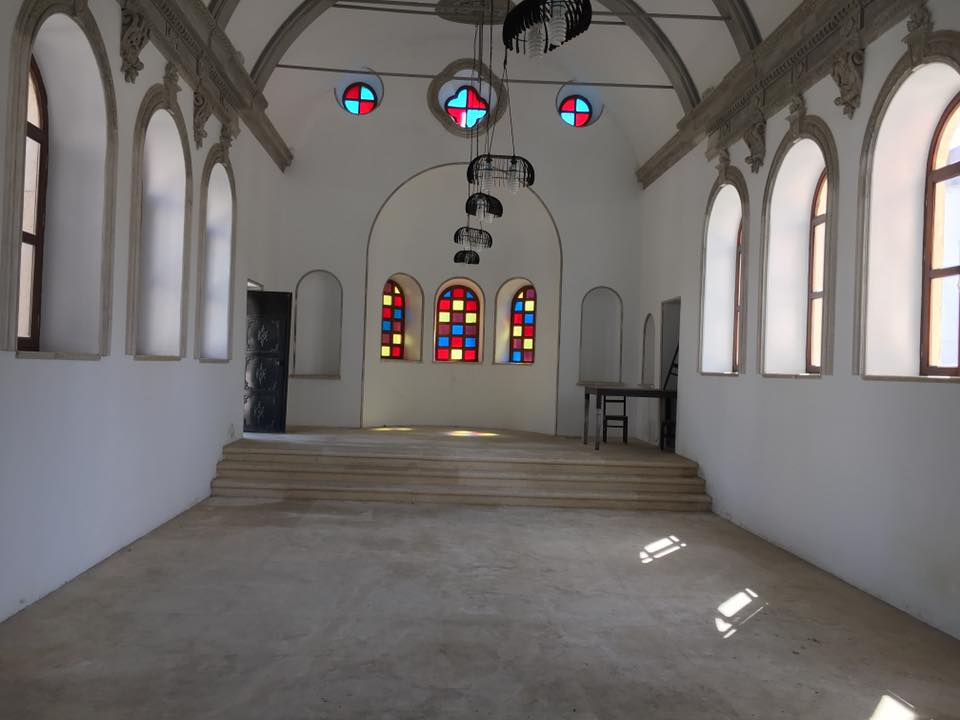
Interior of a historic church in Anatolia

A living heritage

More than stones.

These cities are more than archaeological remains. Each carries the story of people who prayed, taught, suffered and placed their hope in Christ. Anatolia’s Christian heritage calls us to remember the past and also to see the church living in these lands today.