
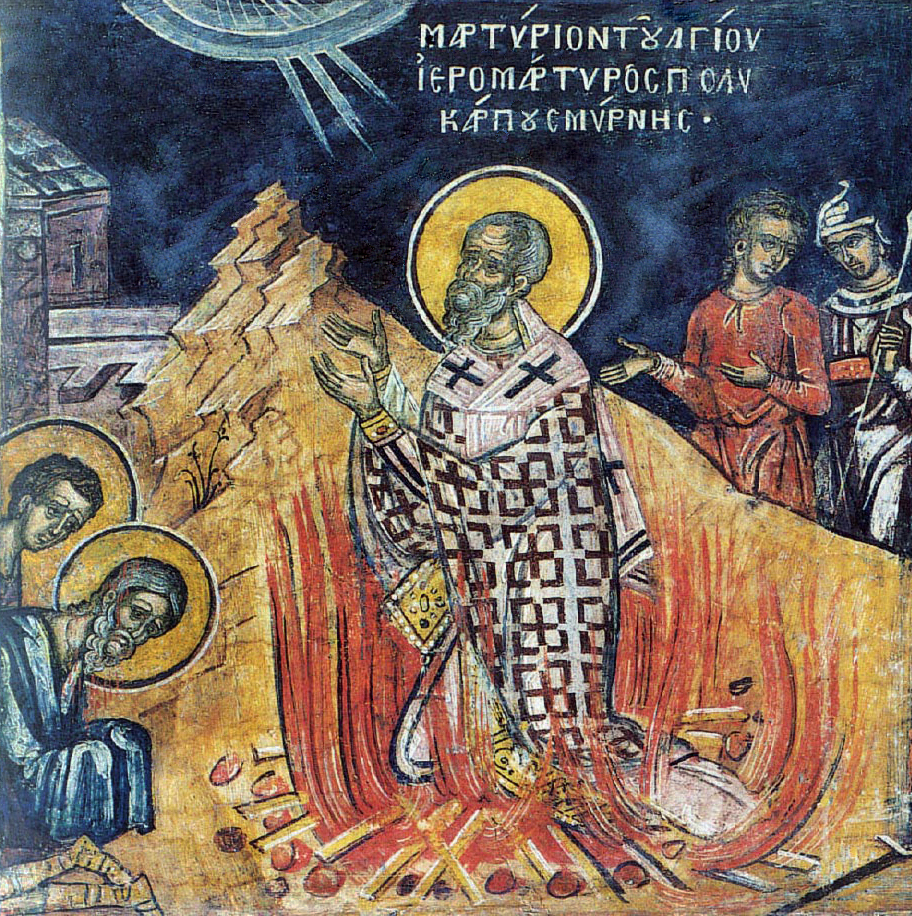
The ancient Martyrdom of Polycarp unfolds the persecution in Smyrna scene by scene. Friends take the elderly bishop to a farmhouse, but when his hiding place is betrayed he refuses to flee again. He asks that food be given to the men who have come to arrest him and requests an hour for prayer. The text presents him not as a man eager for death, but as a calm pastor carrying fear through prayer.
The text also tells of a vision three days before his arrest in which Polycarp sees his pillow burning and says that he must be burned alive. As he enters the stadium, a voice from heaven is said to call, “Be strong, and show yourself a man, O Polycarp!” No speaker is seen, but the Christians present are said to have heard it.
In the stadium the proconsul urges him to respect his age, swear by Caesar’s fortune and revile Christ. Polycarp answers that he cannot blaspheme the King who has never wronged him. When the pile is lit, the account says the flames form an arch like a ship’s sail filled with wind and circle his body without consuming it. He appears like bread baking or gold glowing in a furnace, while a fragrance like incense fills the air. When the fire fails to consume him, an executioner pierces him with a dagger, and the blood that flows is said to extinguish the flames.
The church of Smyrna closes its letter by distinguishing the worship given to Christ from the love shown to martyrs. Irenaeus, who remembered hearing Polycarp in his youth, says that the bishop had learned from apostles and faithfully repeated what he had received. That living link turned a local execution into a story of memory passed from one Christian generation to another.