
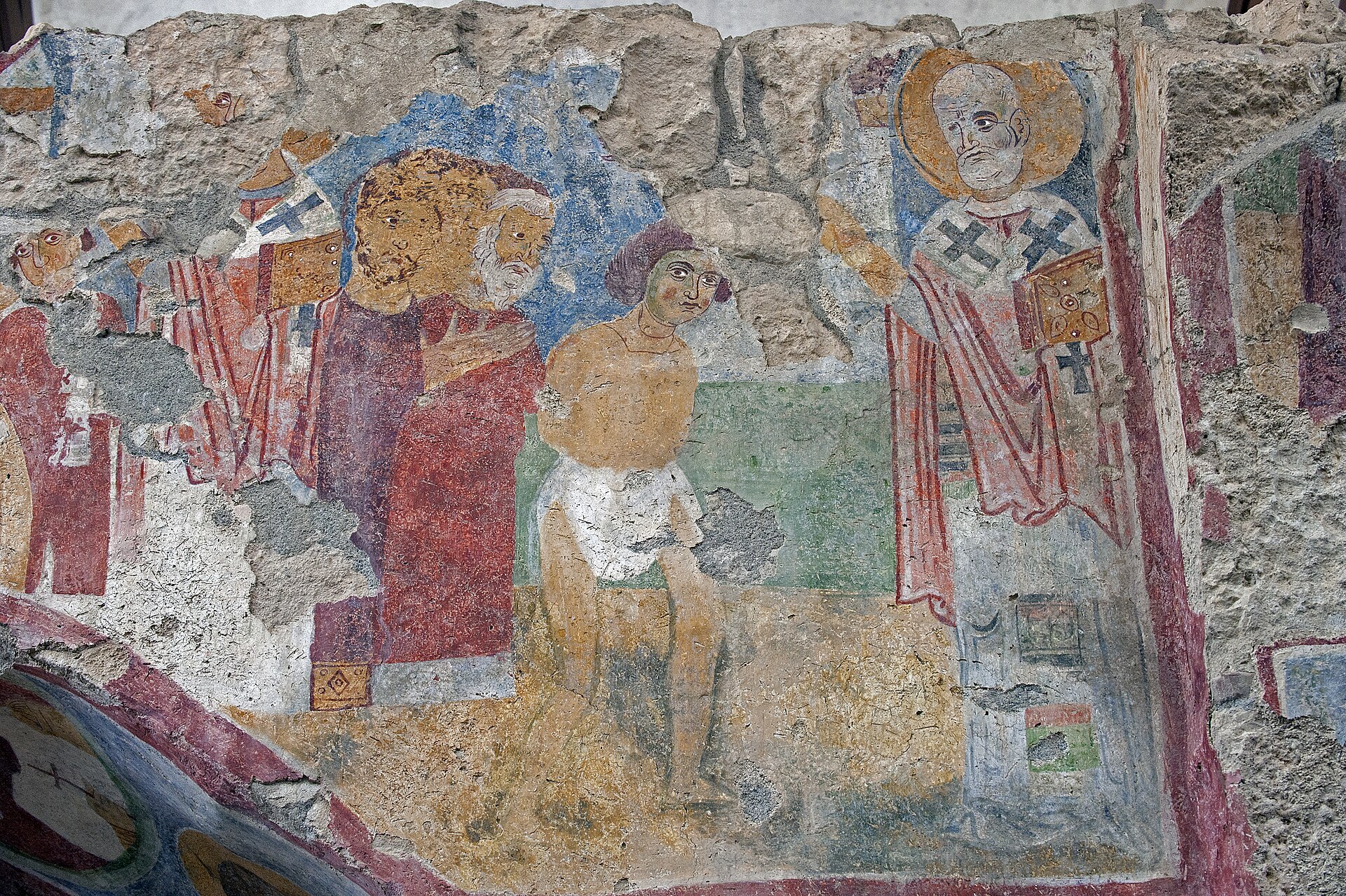
Historically certain information about Nicholas is scarce. He is remembered as the fourth-century bishop of Myra in Lycia, and devotion to him arose very early. The tradition that he was born at Patara anchors his life on the coast of present-day Antalya, while the church and tomb memory at Myra became the physical centre of his veneration in Anatolia.
The best-loved story concerns a poor father unable to provide dowries for his three daughters. Nicholas secretly leaves bags of gold by night, protecting the family from destitution while also protecting their dignity. Details about a window, chimney or stockings belong to different retellings, but the moral centre is stable: the giver hides his name so that the people receiving help do not become a stage for his generosity.
Later miracle traditions recorded by Vatican News tell of Nicholas praying and restoring to life three young theology students murdered by an innkeeper. Another story says that he suddenly returned the kidnapped boy Basileos from a foreign ruler’s court to his praying parents. His patronage of sailors is linked to an account in which he prays during a violent storm and the wind and waves immediately become calm. These are not historically verified reports, but church traditions showing how Nicholas came to be remembered as a protector of the vulnerable.
The saint’s feast and customs of giving to children and the poor spread across Europe. The Dutch name Sinterklaas and later immigrant traditions helped shape the North American Santa Claus. The modern red-clad figure is the result of centuries of cultural development; behind it remains the Anatolian bishop’s enduring question about whether goodness can be practised quietly, without humiliating the recipient or glorifying the giver.